
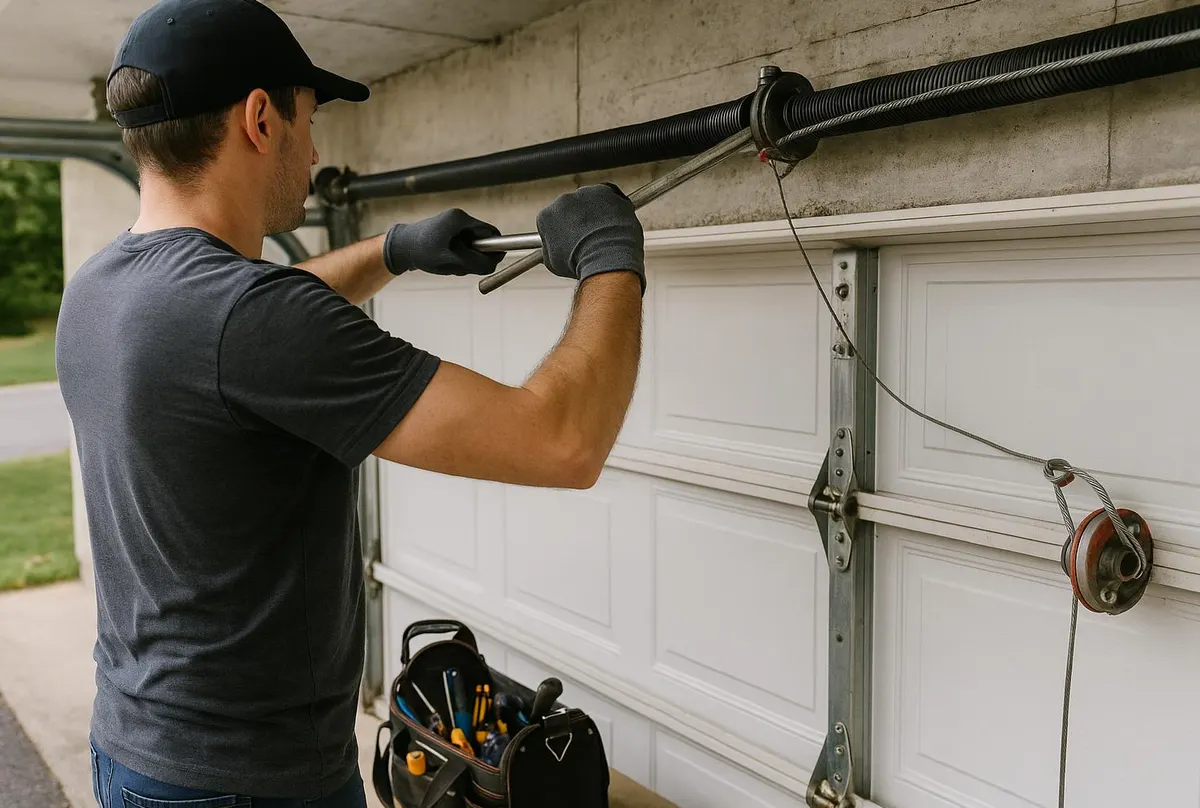
What a Skipped Fall Check-Up Really Costs You
Put this off and you're not just risking a squeaky door. A spring that's been quietly corroding since June can snap the first cold morning you ask it to lift a door that's heavier than usual from moisture. An opener motor that's been straining against swollen panels all summer can burn out just as temperatures finally drop and you're using the garage door more, not less. And hardware that got stressed during storm season but never got re-torqued can work itself loose over the next few months of temperature swings. None of this is dramatic until the day it is — usually when the door won't open, won't close, or comes down on something it shouldn't.
Check for Damage Hurricane Season Left Behind
By this point in the year, your garage door has spent months dealing with heat, humidity, and heavy rain. Before you move into cooler weather, walk the door and track system and look for:
- Rust spots on hinges, springs, and track bolts, especially if you're closer to the coast where salt air accelerates corrosion
- Swollen or warped wood panels that no longer sit flush in the frame
- Water staining on the inside bottom panel, a sign water has been pooling against the door during afternoon downpours
- Loose or stripped screws where storm winds may have stressed the track brackets
Catching this now, while the weather is still warm enough for repairs to cure and seal properly, is easier than dealing with it mid-winter.
Re-Check Wind-Load Hardware Before You Forget
If your garage door has wind-load rated bracing, struts, or reinforced track to handle hurricane-season winds, don't assume it's still properly set just because the storms are easing up. Vibration from repeated wind events can loosen fasteners even when nothing looks visibly wrong. Walk the track brackets and strut connections and snug anything that's moved. This is also a good time to confirm the door still closes flush and seals evenly along all four sides — a door that's shifted slightly out of true won't seal as well against the cooler, drier air moving in.
Lubricate for Temperature Swings, Not Just Heat
Central Florida doesn't get brutal cold, but it does get real swings between warm afternoons and genuinely cool mornings once winter sets in. Metal contracts in the cold, and old, gummed-up lubricant that was fine in August can stiffen and slow the rollers once temperatures start dropping at night. Wipe down tracks, hinges, and rollers to remove accumulated grime and humidity residue, then apply a silicone-based garage door lubricant — not household oil, which attracts dust and breaks down faster in this climate.
Reseal Against Drier Air
After months of humidity, the air coming in this winter will be noticeably drier, and wood or composite panels that swelled over summer may start to shrink back, opening small gaps along the weatherstripping. Run your hand along the bottom seal and side seals on a windy day — if you feel air movement, the seal has likely pulled away from the frame. Replacing worn weatherstripping now keeps out dust, pests, and cooler drafts before they become a daily annoyance.
Test the Opener and Safety Sensors
Garage door openers work harder during storm season, cycling more often as doors get opened and closed around weather. Before winter, test the auto-reverse safety feature by placing a block of wood in the door's path and closing it — it should reverse on contact. Also wipe down the photo-eye sensors near the floor; pollen, dust, and moisture film from summer storms can cause false readings or intermittent failures that only get more noticeable as you rely on the opener more through the cooler months.
Check the Balance
Disconnect the opener and lift the door halfway by hand. A properly balanced door stays in place; one that drifts up or falls down means the springs are no longer carrying their share of the weight. This is one of the most common precursors to a full spring failure, and it's much cheaper to adjust than to fix after a break.
When to Call Christmas Door & Opener
If you find rust on the springs, a door that won't stay balanced, or hardware that's visibly loosened from a season of storms, that's the point to call in a technician rather than keep testing it yourself. Our team handles garage door spring repair and garage door tune-up & maintenance for homeowners throughout Christmas, Titusville, Geneva, Oviedo, Chuluota, Bithlo, Cocoa, and Wedgefield, and we'll check the whole system — springs, cables, track alignment, and opener sensors — in one visit so nothing gets missed before winter sets in.
Looking for a garage door company near Christmas, FL to handle your fall check-up? Call Christmas Door & Opener today and get your door ready for the season ahead.