
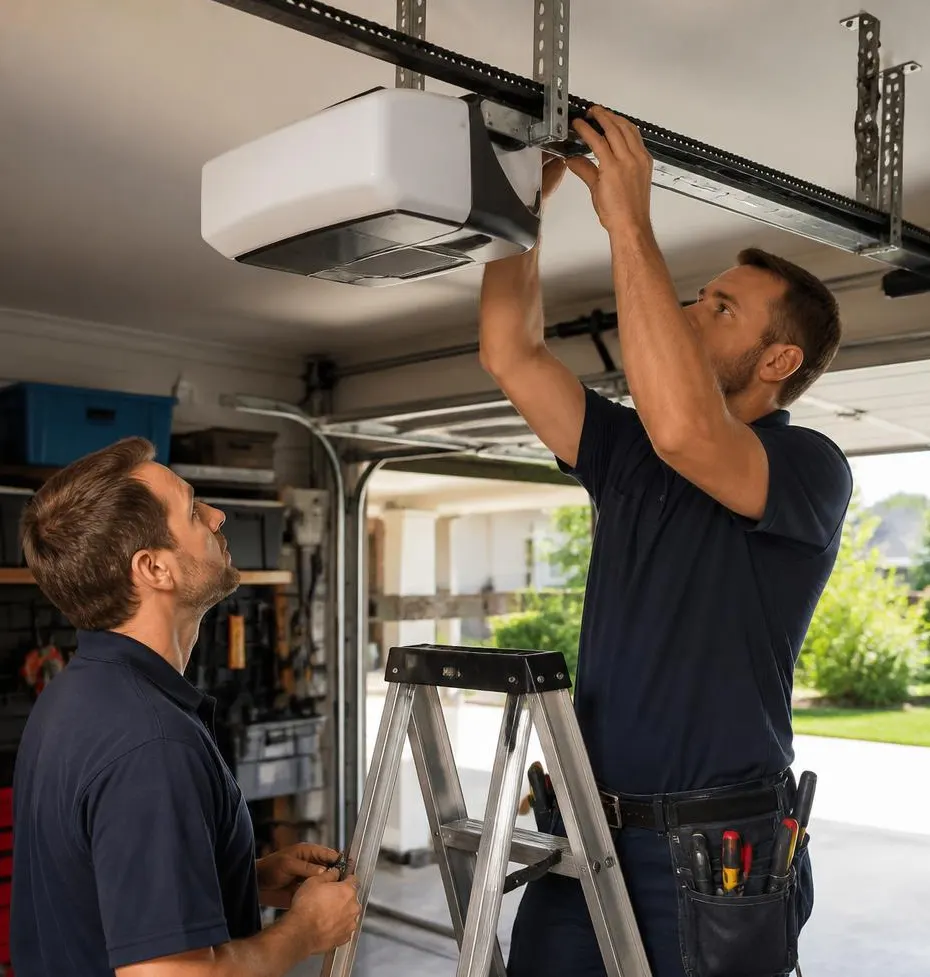
The Mistake Almost Everyone Makes First
Most homeowners reach for WD-40 the moment their garage door starts squeaking. It's already in the garage, it's cheap, and the can practically promises to fix anything mechanical. The problem is that WD-40 isn't a lubricant — it's a solvent. It's designed to loosen rust and strip away old grease and grime, which is great for prepping a part, but terrible for keeping it moving smoothly. Once it evaporates, it leaves metal drier than before and attracts dust and grit right back into the hinges and rollers. In a climate like ours, where humidity and salt-tinged air off the coast speed up corrosion, that dry spell doesn't last long before rust creeps back in.
Proper lubrication means using a product made to stay put, resist moisture, and keep doing its job through the heat, humidity, and afternoon downpours that define storm season here. Here's how to do it right.
Tools You'll Need
- A sturdy stepladder
- Clean shop rags or paper towels
- A soft-bristle brush (an old toothbrush works)
- Silicone-based garage door lubricant or white lithium grease
- Work gloves
- A flashlight for checking tracks and hardware
Skip anything petroleum-based like motor oil, cooking oil, or general-purpose household oil. These attract dust, run off in heat, and gum up over time — especially in a garage that swings between a hot, humid afternoon and a sudden thunderstorm-driven temperature drop.
Step-by-Step Lubrication Guide
- Disconnect the opener and close the door manually. Pull the emergency release cord so the door is under manual control, not connected to the motor. This keeps the door from moving unexpectedly while you're working.
- Inspect before you lubricate. Run your hand (gloved) along the tracks, hinges, and rollers. Look for rust spots, bent hinges, frayed cable strands, or rollers that wobble instead of spinning cleanly. Lubricant won't fix any of these — it just keeps healthy parts healthy.
- Wipe down the hardware first. Use a dry rag to remove dust, cobwebs, and old grease buildup from hinges, rollers, and the track. A soft brush helps get into tight spots. Lubricating over grime just creates a sticky paste that attracts more dirt.
- Lubricate the hinges. Apply a light coat of silicone or lithium lubricant to each hinge pivot point, where one panel connects to the next. Open and close the door a few times by hand to work it in.
- Lubricate the roller stems, not the wheels. If your rollers have exposed bearings, apply lubricant to the stem and bearing area, not the roller wheel itself. Nylon rollers especially don't need the wheel surface lubricated — only the moving metal parts.
- Do the springs lightly. A thin coat on the coils helps reduce friction and resist rust, which matters more here than in drier climates. Don't overdo it; a light, even coat is enough.
- Leave the tracks alone. This trips up a lot of homeowners. Tracks should be clean, not lubricated. Oil or grease on the track surface attracts dirt and can actually cause the rollers to slip instead of roll smoothly.
- Lubricate the opener's chain or screw rail. If you have a chain-drive opener, apply a light coat along the chain. For screw-drive openers, use the lubricant recommended in the owner's manual on the threaded rail.
- Check the lock and latch mechanism. If your door has a manual lock, a small amount of lubricant on the latch and keyhole keeps it from sticking, especially after a humid stretch.
- Run the door through a few full cycles. Reconnect the opener and watch the door open and close completely. Listen for any remaining grinding or squeaking, and wipe away excess lubricant so it doesn't drip or collect dust.
What a Homeowner Can Safely Handle
Everything above — hinges, rollers, chain or rail, and light spring coating — is reasonable DIY maintenance for most homeowners with basic tools and a stepladder. Doing this every few months, especially heading into and out of storm season, helps parts resist the swelling and rust that come with repeated humidity swings.
What Needs a Technician
Torsion springs under tension, frayed or snapped cables, bent or misaligned tracks, and anything involving the opener's internal gears are not DIY territory. These components store enough force to cause serious injury if handled incorrectly, and a slightly-off adjustment can throw the whole door out of balance. If your door feels heavy, closes unevenly, or you notice visible wear on the cables, that's a sign to stop and call in a professional rather than keep lubricating around the problem.
When to Call Christmas Door & Opener
If you've gone through the lubrication steps and the door is still noisy, sticking, or slow to respond, it's often a sign of wear that maintenance alone won't fix. Our Garage Door Tune-Up & Maintenance service covers a full inspection of springs, cables, and hardware, catching rust or wear before it turns into an off-track door or a snapped cable during a storm. If we find a spring that's lost tension or is showing corrosion, our Garage Door Spring Repair service handles the replacement safely, with the right tools for the tension involved.
If your garage door in Christmas, Titusville, Geneva, Oviedo, Chuluota, Bithlo, Cocoa, or Wedgefield needs more than a fresh coat of lubricant, give Christmas Door & Opener a call. We're the local garage door technician team that knows how this climate wears down hardware, and we're ready to keep your door running smoothly through every season.