
What We See on a Service Call After a Storm
A tech pulls up to a garage with a door bowed out several inches in the middle, rollers torn clean out of the track, and a homeowner who says the wind "just pushed it in." That's the call we get over and over this time of year. Sometimes it's a track bent from the door flexing too far. Sometimes it's a torsion spring that snapped under the extra strain of the door fighting the wind. Either way, the pattern is the same: a door that wasn't braced or rated for the pressure it just took.
What's frustrating is that most of this is preventable. The door usually isn't old or neglected — it just was never set up to handle sustained wind-load, and nobody checked until a storm made it obvious.
Why the Garage Door Is a Home's Weakest Wall
Exterior walls are braced, tied into the frame, and built to resist lateral pressure. A garage door is a large moving panel held in place mostly by its tracks, rollers, and the strength of the panels themselves. When wind pushes against a home, the garage door takes a disproportionate share of that pressure because it's the biggest unsupported opening in the structure.
If that door fails — buckles inward, blows off its track, or gets punched through by debris — the pressure inside the garage changes fast. That sudden pressure shift is a major reason roofs and walls fail during high wind events. A door that holds is doing more than protecting your car and tools; it's protecting the rest of the house.
Wind-Load Ratings Aren't Just a Coastal Concern
Homes further inland, including areas like Christmas, Bithlo, and Geneva, still see strong straight-line winds and tropical systems moving through. Wind-load rules exist because garage doors in this part of Florida need to resist real pressure, not just look sturdy. If you don't know whether your current door meets a wind-load rating, that's worth finding out before storm season winds down rather than after the next system forms.
Pre-Storm Inspection Checklist
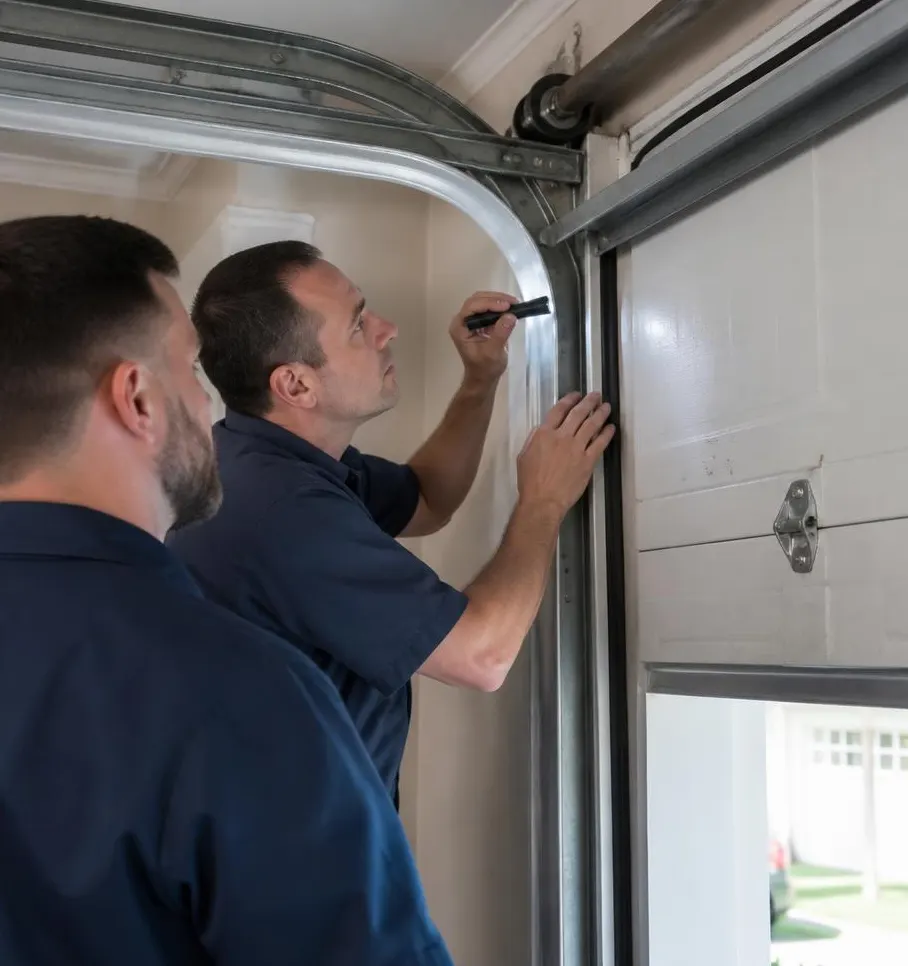
- Track alignment: Stand back and sight down each track. Gaps, bends, or sections pulling away from the wall are weak points that will get worse under pressure.
- Rollers and hinges: Rusted or worn rollers (common after months of humidity and afternoon downpours) can jump the track under stress. Hinges should be tight, not wobbly.
- Panels: Look for dents, cracks, or soft spots, especially near the bottom where splash-back and moisture collect. A weakened panel is the first thing to give under wind pressure.
- Weatherstripping and bottom seal: Cracked or brittle seals let wind-driven rain push underneath, which adds water damage to wind damage.
- Opener and manual release: Confirm the emergency release cord works in case you lose power and need to operate the door manually.
- Bracing: Check whether your door has horizontal or vertical reinforcement struts. Many older doors were installed without them.
Reinforcement Options Worth Considering
If your inspection turns up a door that's aging, unbraced, or not rated for wind-load, there are a few paths forward:
- Retrofit bracing kits add horizontal struts to an existing door, typically in the $100–$300 range for materials. This is a reasonable middle step if the door itself is otherwise sound.
- Impact-rated or wind-rated replacement doors are built with reinforced panels and heavier tracks designed for sustained pressure. This is the stronger long-term option, particularly for detached garages or doors facing open fields where wind has a clear run at the house.
- Opener upgrades matter too — a weak opener motor can let a door drift or rattle in gusts even if the panels and track are solid.
After the Storm: What to Check Before You Trust the Door Again
Even if the door held, open and close it a few times and listen. Grinding, scraping, or a door that hesitates partway can mean a track shifted slightly or a spring took on extra strain. Don't force a door that's sticking — that's often how a cable snaps or a panel cracks further.
When to Call Christmas Door & Opener
If your inspection turns up a bent track, a door that's pulling off-track, or panels that look stressed, that's not a wait-and-see repair. Our team handles off-track door repair and garage door panel replacement for homes throughout Christmas, Titusville, Oviedo, Cocoa, and the surrounding area, and we can tell you quickly whether your door needs reinforcement, a repair, or a full replacement before the next storm system forms.
Call Christmas Door & Opener for a storm-readiness inspection before the next system rolls through east Orange County — it's a lot easier to brace a door now than to replace one after it fails.